Thursday, January 30, 2014

Human Evolution consciously continues...

"Scientific Proof That We Are Becoming Literal Gods", 2014-01-30 by Steven Bancarz [https://web.archive.org/web/20140330185633/http://www.spiritscienceandmetaphysics.com/scientific-proof-that-we-are-becoming-literal-gods/]: (sources numbered in parentheses)
What if I told you that in 1000 years, we will look like petty cavemen in our current physical and mental state compared to future humans?  There is an overwhelming amount of scientific evidence that proves that not only are our physical bodies evolving at an accelerated rate, our consciousness is as well.  We are indeed in the evolutionary fast lane, and perhaps we are witnessing the prophecies of apotheosis in action.   Our consciousness and bodies are evolving at a rate never seen before in the history of the earth
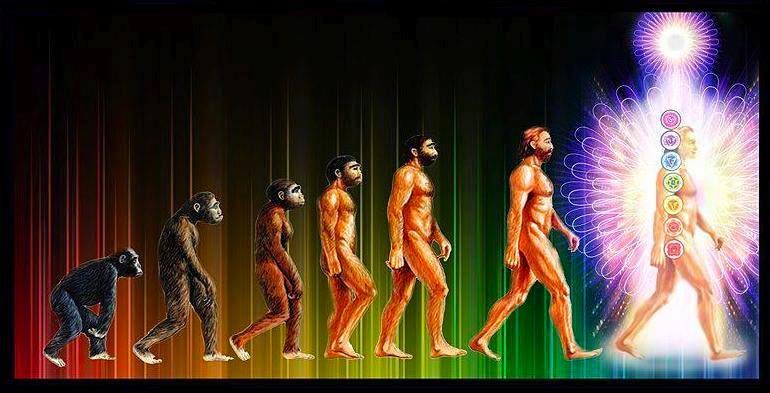
We can look around the world and see the signs of dramatic spiritual evolution as we continue to actualize our fullest potential.  There is an awakening happening right now, and December 21st 2012 really did mark the dawn of a new age of enlightenment.  But as this global awakening is happening, our physical vehicles and intelligence levels are also evolving as we step into the light of this new age.
In 2007, Dr. John Hawks, professor of anthropology at the University of Wisconsin-Madison, published an article in the peer-reviewed journal Proceedings of the National Academy of Sciences (PNAS) titled “Recent acceleration of human adaptive evolution”.  This article showed that positive selection within human beings has occurred at a rate 100 times higher than any other time in human history, and that this massive acceleration within evolution has happened particularly within the last 5000 years(3).
The study specifically looked for DNA sequence variation known as SNPs which are mutations at a single point on a chromosome. As indicated in Health and Medicine Week, “The researchers identify recent genetic change by finding long blocks of DNA base pairs that are connected. Because human DNA is constantly being reshuffled through recombination, a long, uninterrupted segment of LD is usually evidence of positive selection. Linkage disequilibrium decays quickly as recombination occurs across many generations, so finding these uninterrupted segments is strong evidence of recent adaptation, Hawks says” (4).
The researchers concluded that as the population of human beings continues to increase, the acceleration effect of evolution has also increased because of the amount of room there is for new mutations to occur and be passed throughout the population. According to the original journal article publication, approximately 1800 genes, or 7% of our entire genetic system, have experience recent positive selection.  They add that “To the extent that new adaptive alleles continued to reflect demographic growth, the Neolithic and later periods would have experienced a rate of adaptive evolution >100 times higher than characterized most of human evolution.”(5)
With the cultivation of agriculture, the constant changes and experimentation in diet (such as the adaptive tolerances to lactose in milk), the exposure to diseases (such as the introduction of the CCR5 gene to make people resistant to AIDS), and the massive spike in human population within the last 10,000 years, nature has been presented with the optimal breeding grounds for positive selection and new adaptive mutations in the introduction of a massive gene pool and constantly changing environments(6).
For example, in only the past few millennia, Europeans have experienced rapid changes in the gene for a protein that transfers potassium ions in and out of taste buds and nerve cells, as well as changes in genes associated with Alzheimer’s disease and even cancer.(7) John Hawks boldest of claims was recorded on the University of Wisconsin-Madison website, where Hawks says: “We are more different genetically from people living 5,000 years ago than they were different from Neanderthals.”(8) In other words, if you take a human being from 3000 BC such as an ancient Egyptian, you will find that they are more similar to Neanderthals in terms of their genetics than they are to us.
Anthropologist and geneticist Dr. Henry Harpending from the University of Utah also participated in conducting this study, and told National Geographic that “If humans had always evolved at this rate, the difference between modern humans and chimps should be 160 times greater than it really is.”(9) There is a vast body of empirical evidence that suggests that human beings have recently been the subjects of accelerated natural selection within genetic information.
There is also evidence that this recent acceleration in evolution is not only biologically physical, but is also mental in terms of intelligence. J.R. Flynn, professor of political science at the University of Otago in New Zealand, discovered that IQ scores across the globe have went up 3 points on average per decade for each decade for as long as IQ test scores have been recorded (which has been since 1910 in the United States).  This means that someone that scored in the top 10% on the IQ test 100 years ago would now been in the weakest 5%.  These increases have been occurring at a steady rate amongst both male and female genders and have been empirically verified in over 20 countries(10) (see Figure 1).
The average IQ score has always been set to 100, so if a person passes the IQ test with a score of 130, they are among the higher end of performers, and a score of 80 would deviate far from the average raw score.  What is striking is that IQ scores have had to be continuously made more difficult over the last century to keep the mean score at 100. Flynn discovered that the greatest differences were found in culturally reduced tests and fluid intelligence. Fluid intelligence is the ability to think rationality, abstractly, and find solutions to novel problems independent of acquired knowledge.
He makes adamant the fact that these are not learned-content gains through more information being accessible to people, as this would only reflect crystallized intelligence regarding the application of learned knowledge (11).  And furthermore, other environmental factors such as more education and better economic situations are impoverished when trying to adequately explain the gaps in some of the cases, such as the increase in IQ scores by a total of 20 points in 30 years by the Dutch.

As Flynn states in one of his original papers “The international data fall into the same pattern as the American data. Gains are about 18 IQ points per generation (30 years) on Ravens, somewhere between 9 and 18 points on Wechsler and Stanford–Binet tests, about 9 points on purely verbal tests, small or nil on Wechsler subtests such as arithmetic, information, and vocabulary”(12).
The Ravens test measures reasoning abilities using abstract objects independent of language, writing, and reading.  This means that these test increases are not a result of people having more access to knowledge and information, but shows that on the contrary, the most significant results were indicated in testings that involve pure problem-solving intelligence, such as identifying non-verbal patterns and relationships.(13) Environmental impacts that can explain these increases in IQ scores have yet to be identified, and are still being speculated upon.  These are some of the most important discoveries in psychology, which Flynn calls “a cultural renaissance too great to be overlooked”(14).
Contrary to some of the scientific consensus, human evolution is undergoing dramatic increase in terms of genetics and intelligence.  We now have scientific proof that evolution is not merely a matter of cultural ingenuity and social conditionings.  Nor is it exclusively reserved for physiological adaptation, but is in fact a concrete measurable phenomenon in human psychology that happening within our species right now.  Evolution can now be spoken of in something that is currently in a state of progression towards complexity, as we have seen from the evidence of geneticists and psychologists alike.
Is this accelerated state just one random hiccup that will plateau in the near future? Will we continue to evolve at this exponential rate from this point forward? Are we witnessing the physical manifestation of the ancient prophecies of human apotheosis in action?  This area remains ripe for investigation, and insofar as the conditions in which this evolution is occurring remain present (population increases, environmental changes, technological and intellectual refining) we should see this effect sufficiently sustained as we enter this new age of evolution and continue to explore this exciting frontier.
In 1000 years, we will be literal gods in comparison to our current state.  We will have technologies and abilities that we could only dream of right now, and our bodies will be so much more evolved that we will look back a millennium and wonder how ancient man lived such primitive lives with such archaic bodies.  Maybe we really are entering the Golden Age of spiritual and physical evolution that so many ancient cultures spoke of.

Sources:
1. The Guardian. “Is human evolution finally over?”. The Observer. 03 Feb. 2002. [https://web.archive.org/web/20130826001713/http://www.theguardian.com/science/2002/feb/03/genetics.research]
2.  Furness, Hannah. “Sir David Attenborough: Humans have stopped evolving”. The Telegraph. Sept 2013. [http://www.telegraph.co.uk/science/evolution/10297124/Sir-David-Attenborough-Humans-have-stopped-evolving.html]
3. “Genome study places modern humans in the evolutionary fast lane.” Health & Medicine Week. 24 Dec. 2007: 271. Academic OneFile.
4. Ibid.
5. Hawks, John. John Hawks, Eric T. Wang, Gregory M. Cochran, Henry C. Harpending, and Robert K. Moyzis. “Recent Acceleration of Human Adaptive Evolution”. PNAS, 2007 104 (52) 20753-20758; published ahead of print December 17, 2007, doi: 10.1073/pnas.0707650104
6. See 3.
7. “Darwin’s children; Human evolution.” The Economist 15 Dec. 2007: 88(US). Academic OneFile.
8. Matmiller, Brian. “Genome study places modern humans in the evolutionary fast lane”. University of Wisconsin-Madison News. 10 Dec. 2007. [http://www.news.wisc.edu/14548]
9. Roach, Joe. “Evolution is Speeding Up, Study Says”. National Geographic. 11 Dec. 2007. [http://news.nationalgeographic.com/news/2007/12/071211-human-evolution.html]
10. Passer, Michael W. Ronald E. Smith, Michael L. Atkinson, John B. Mitchell, Darwin W. Muir. Psychology: Frontiers and Applications. 4th Canadian ed. McGraw-Hill Ryerson Limited, 2011, pg. 372-373. Print.
11. Flynn, J. R. “Massive IQ gains in 14 nations: What IQ tests really measure” .Psychological Bulletin, 101(2). 1987. 171-191. doi:10.1037/0033-2909.101.2.171
12. Flynn, J. R. “Searching for justice: The discovery of IQ gains over time”. American Psychologist, 54(1). 1999. 5-20. doi:10.1037/0003-066X.54.1.5
13. See 11.
14. Bower, Bruce. “IQ’s generation gap: is intelligence reaching new heights, or is something amiss with the tests that measure it?” The Free Library 15 August 1987.

Tuesday, January 14, 2014

Bad skepticism

The following is an example of falsehoods presented as 'scientific skepticism', which does not address any manner of ESP, and instead provides a 'false equivalence' style of argument to explain any sort of ESP as simple awareness based on the accepted five senses.

"Australia study debunks existence of 'sixth sense' or ESP"
2014-01-14 from "United Press International (UPI)" newswire
[http://www.upi.com/Science_News/2014/01/14/Australia-study-debunks-existence-of-sixth-sense-or-ESP/UPI-88851389737536]:
MELBOURNE, Jan. 14 (UPI) -- The belief that a sixth sense, also known as extrasensory perception, exists has no foundation in science, researchers at the University of Melbourne say.
Instead, people can reliably sense when a change has occurred, even when they could not see exactly what had changed; for example, a person might notice a general change in someone's appearance but not be able to identify that the person had had a haircut.
It's not ESP, the researchers said, but rather -- as proven in their scientific study -- that people can reliably sense changes that they cannot visually identify.

"There is a common belief that observers can experience changes directly with their mind, without needing to rely on the traditional physical senses such as vision, hearing, taste, smell and touch to identify it," Piers Howe from the Melbourne School of Psychological Sciences said. "This alleged ability is sometimes referred to as a sixth sense or ESP."
"We were able to show that while observers could reliably sense changes that they could not visually identify, this ability was not due to extrasensory perception or a sixth sense," he said.
In the study, participants were presented with pairs of color photographs, both of the same female, but in some cases her appearance -- her hairstyle, for example -- would be different in the two photographs.
Results showed the participants could generally detect when a change had occurred even when they could not identify exactly what had changed, the researchers said.
They might "feel" or "sense" that a change had occurred without being able to visually identify it, the researchers said, but that could be explained without invoking an extrasensory mechanism.

Sunday, January 12, 2014

"Caffeine has positive effect on memory"

2014-01-12 from Johns Hopkins University [http://hub.jhu.edu/2014/01/12/caffeine-enhances-memory]):
Whether it’s a mug full of fresh-brewed coffee, a cup of hot tea, or a can of soda, consuming caffeine is the energy boost of choice for millions who want to wake up or stay up.
Now, researchers at the Johns Hopkins University have found another use for the popular stimulant: memory enhancer.
Michael Yassa, an assistant professor of psychological and brain sciences at Johns Hopkins, and his team of scientists found that caffeine has a positive effect on our long-term memory. Their research, published by the journal Nature Neuroscience [http://www.nature.com/neuro/journal/vaop/ncurrent/full/nn.3623.html], shows that caffeine enhances certain memories at least up to 24 hours after it is consumed.
“We’ve always known that caffeine has cognitive-enhancing effects, but its particular effects on strengthening memories and making them resistant to forgetting has never been examined in detail in humans,” said Yassa, senior author of the paper. “We report for the first time a specific effect of caffeine on reducing forgetting over 24 hours.”
The Johns Hopkins researchers conducted a double-blind trial in which participants who did not regularly eat or drink caffeinated products received either a placebo or a 200-milligram caffeine tablet five minutes after studying a series of images. Salivary samples were taken from the participants before they took the tablets to measure their caffeine levels. Samples were taken again one, three, and 24 hours afterwards.
The next day, both groups were tested on their ability to recognize images from the previous day’s study session. On the test, some of the visuals were the same as those from the day before, some were new additions, and some were similar but not the same.
More members of the caffeine group were able to correctly identify the new images as “similar” to previously viewed images rather than erroneously citing them as the same.
The brain’s ability to recognize the difference between two similar but not identical items, called pattern separation, reflects a deeper level of memory retention, the researchers said.
“If we used a standard recognition memory task without these tricky similar items, we would have found no effect of caffeine,” Yassa said. “However, using these items requires the brain to make a more difficult discrimination—what we call pattern separation, which seems to be the process that is enhanced by caffeine in our case.”
The memory center in the human brain is the hippocampus, a seahorse-shaped area in the medial temporal lobe of the brain. The hippocampus is the switchbox for all short- and long-term memories. Most research done on memory—the effects of concussions in athletes, of war-related head injuries, and of dementia in the aging population—focuses on this area of the brain.
Until now, caffeine’s effects on long-term memory had not been examined in detail. Of the few studies done, the general consensus was that caffeine has little or no effect on long-term memory retention.
The research is different from prior experiments because the subjects took the caffeine tablets only after they had viewed and attempted to memorize the images.
“Almost all prior studies administered caffeine before the study session, so if there is an enhancement, it’s not clear if it’s due to caffeine’s effects on attention, vigilance, focus, or other factors,” Yassa said. “By administering caffeine after the experiment, we rule out all of these effects and make sure that if there is an enhancement, it’s due to memory and nothing else.”
According to the U.S. Food and Drug Administration, 90 percent of people worldwide consume caffeine in one form or another. In the United States, 80 percent of adults consume caffeine every day. The average adult has an intake of about 200 milligrams—the same amount used in the Yassa study—or roughly one cup of strong coffee per day.
Yassa’s team completed the research at Johns Hopkins before his lab moved to the University of California, Irvine, at the start of this year.
“The next step for us is to figure out the brain mechanisms underlying this enhancement,” Yassa said. “We can use brain-imaging techniques to address these questions. We also know that caffeine is associated with healthy longevity and may have some protective effects from cognitive decline like Alzheimer’s disease. These are certainly important questions for the future.”

Notes about this neuroscience and memory research -
The lead author of the paper is Daniel Borota, an undergraduate student in Yassa’s lab who received a Provost’s Undergraduate Research Award from Johns Hopkins to conduct the study.
Additional authors, all from Johns Hopkins, are: Elizabeth Murray, a research program coordinator in the Department of Psychological and Brain Sciences; John Toscano, professor in the Department of Chemistry; Gizem Kecili, a graduate student also in the Chemistry Department; and Allen Chang, Maria Ly, and Joseph Watabe, all undergraduates in the Department of Psychological and Brain Sciences.
This research was supported by grants number P50 AG05146 and R01 AG034613 from the National Institute on Aging as well as CHE-1213438 from the National Science Foundation.

Original Research: Abstract for “Post-study caffeine administration enhances memory consolidation in humans” by Daniel Borota, Elizabeth Murray, Gizem Keceli, Allen Chang, Joseph M Watabe, Maria Ly, John P Toscano and Michael A Yassa in Nature Neuroscience. Published online January 12 2014 doi:10.1038/nn.3623

Thursday, January 9, 2014

Your soul is a personal quantum reality vortex

"Scientists Claim That Quantum Theory Proves Consciousness Moves To Another Universe At Death"
[https://web.archive.org/web/20140109054328/http://www.spiritscienceandmetaphysics.com/scientists-claim-that-quantum-theory-proves-consciousness-moves-to-another-universe-at-death/]:
A book titled “Biocentrism: How Life and Consciousness Are the Keys to Understanding the Nature of the Universe“ has stirred up the Internet, because it contained a notion that life does not end when the body dies, and it can last forever. The author of this publication, scientist Dr. Robert Lanza who was voted the 3rd most important scientist alive by the NY Times, has no doubts that this is possible.

Beyond time and space -
Lanza is an expert in regenerative medicine and scientific director of Advanced Cell Technology Company. Before he has been known for his extensive research which dealt with stem cells, he was also famous for several successful experiments on cloning endangered animal species.
But not so long ago, the scientist became involved with physics, quantum mechanics and astrophysics. This explosive mixture has given birth to the new theory of biocentrism, which the professor has been preaching ever since.  Biocentrism teaches that life and consciousness are fundamental to the universe.  It is consciousness that creates the material universe, not the other way around.
Lanza points to the structure of the universe itself, and that the laws, forces, and constants of the universe appear to be fine-tuned for life, implying intelligence existed prior to matter.  He also claims that space and time are not objects or things, but rather tools of our animal understanding.  Lanza says that we carry space and time around with us “like turtles with shells.” meaning that when the shell comes off (space and time), we still exist.
The theory implies that death of consciousness simply does not exist.   It only exists as a thought because people identify themselves with their body. They believe that the body is going to perish, sooner or later, thinking their consciousness will disappear too.  If the body generates consciousness, then consciousness dies when the body dies.  But if the body receives consciousness in the same way that a cable box receives satellite signals, then of course consciousness does not end at the death of the physical vehicle. In fact, consciousness exists outside of constraints of time and space. It is able to be anywhere: in the human body and outside of it. In other words, it is non-local in the same sense that quantum objects are non-local.
Lanza also believes that multiple universes can exist simultaneously.  In one universe, the body can be dead. And in another it continues to exist, absorbing consciousness which migrated into this universe.  This means that a dead person while traveling through the same tunnel ends up not in hell or in heaven, but in a similar world he or she once inhabited, but this time alive. And so on, infinitely.  It’s almost like a cosmic Russian doll afterlife effect.

Multiple worlds -
This hope-instilling, but extremely controversial theory by Lanza has many unwitting supporters, not just mere mortals who want to live forever, but also some well-known scientists. These are the physicists and astrophysicists who tend to agree with existence of parallel worlds and who suggest the possibility of multiple universes. Multiverse (multi-universe) is a so-called scientific concept, which they defend. They believe that no physical laws exist which would prohibit the existence of parallel worlds.
The first one was a science fiction writer H.G. Wells who proclaimed in 1895 in his story “The Door in the Wall”.  And after 62 years, this idea was developed by Dr. Hugh Everett in his graduate thesis at the Princeton University. It basically posits that at any given moment the universe divides into countless similar instances. And the next moment, these “newborn” universes split in a similar fashion. In some of these worlds you may be present: reading this article in one universe, or watching TV in another.
The triggering factor for these multiplyingworlds is our actions, explained Everett. If we make some choices, instantly one universe splits into two with different versions of outcomes.
In the 1980s, Andrei Linde, scientist from the Lebedev’s Institute of physics, developed the theory of multiple universes. He is now a professor at Stanford University.  Linde explained: Space consists of many inflating spheres, which give rise to similar spheres, and those, in turn, produce spheres in even greater numbers, and so on to infinity. In the universe, they are spaced apart. They are not aware of each other’s existence. But they represent parts of the same physical universe.
The fact that our universe is not alone is supported by data received from the Planck space telescope. Using the data, scientists have created the most accurate map of the microwave background, the so-called cosmic relic background radiation, which has remained since the inception of our universe. They also found that the universe has a lot of dark recesses represented by some holes and extensive gaps.
Theoretical physicist Laura Mersini-Houghton from the North Carolina University with her colleagues argue: the anomalies of the microwave background exist due to the fact that our universe is influenced by other universes existing nearby. And holes and gaps are a direct result of attacks on us by neighboring universes.

Soul -
So, there is abundance of places or other universes where our soul could migrate after death, according to the theory of neo-biocentrism. But does the soul exist?  Is there any scientific theory of consciousness that could accommodate such a claim?  According to Dr. Stuart Hameroff, a near-death experience happens when the quantum information that inhabits the nervous system leaves the body and dissipates into the universe.  Contrary to materialistic accounts of consciousness, Dr. Hameroff offers an alternative explanation of consciousness that can perhaps appeal to both the rational scientific mind and personal intuitions.
Consciousness resides, according to Stuart and British physicist Sir Roger Penrose, in the microtubules of the brain cells, which are the primary sites of quantum processing.  Upon death, this information is released from your body, meaning that your consciousness goes with it. They have argued that our experience of consciousness is the result of quantum gravity effects in these microtubules, a theory which they dubbed orchestrated objective reduction (Orch-OR).
Consciousness, or at least proto-consciousness is theorized by them to be a fundamental property of the universe, present even at the first moment of the universe during the Big Bang. “In one such scheme proto-conscious experience is a basic property of physical reality accessible to a quantum process associated with brain activity.”
Our souls are in fact constructed from the very fabric of the universe – and may have existed since the beginning of time.  Our brains are just receivers and amplifiers for the proto-consciousness that is intrinsic to the fabric of space-time. So is there really a part of your consciousness that is non-material and will live on after the death of your physical body?
Dr Hameroff told the Science Channel’s Through the Wormhole documentary: “Let’s say the heart stops beating, the blood stops flowing, the microtubules lose their quantum state. The quantum information within the microtubules is not destroyed, it can’t be destroyed, it just distributes and dissipates to the universe at large”.  Robert Lanza would add here that not only does it exist in the universe, it exists perhaps in another universe.
If the patient is resuscitated, revived, this quantum information can go back into the microtubules and the patient says “I had a near death experience”‘
He adds: “If they’re not revived, and the patient dies, it’s possible that this quantum information can exist outside the body, perhaps indefinitely, as a soul.”
This account of quantum consciousness explains things like near-death experiences, astral projection, out of body experiences, and even reincarnation without needing to appeal to religious ideology.  The energy of your consciousness potentially gets recycled back into a different body at some point, and in the mean time it exists outside of the physical body on some other level of reality, and possibly in another universe.
Robert Lanza on Biocentrism: [http://www.youtube.com/watch?v=zI_F4nOKDSM]

Sources:
* "Quantum Theory Proves That Consciousness Moves to Another Universe After Death"[https://web.archive.org/web/20140326121508/http://www.learning-mind.com/quantum-theory-proves-that-consciousness-moves-to-another-universe-after-death/]
* "Biocentric universe" article posted at Wikipedia, archived 2013-12 [https://web.archive.org/web/20131208135857/http://en.wikipedia.org/wiki/Biocentric_universe]
* "Near-death experiences occur when the soul leaves the nervous system and enters the universe, claim two quantum physics experts; Ground-breaking theory holds that quantum substances form the soul, 'They are part of the fundamental structure of the universe", 2012-10-30 by Damien Gayle from the London "Daily Mail" newspaper [https://web.archive.org/web/20140213093059/http://www.dailymail.co.uk/sciencetech/article-2225190/Can-quantum-physics-explain-bizarre-experiences-patients-brought-brink-death.html]
* "Scientists offer quantum theory of soul's existence", 2012-10-31 [https://web.archive.org/web/20130127100719/http://www.news.com.au/news/quantum-scientists-offer-proof-soul-exists/story-fnenjnc3-1226507686757]
* "Does The Soul Exist? Evidence Says ‘Yes’New scientific theory recognizes life’s spiritual dimension", 2011-12-21 by Robert Lanza, M.D. [web.archive.org/web/20140403153740/http://www.psychologytoday.com/blog/biocentrism/201112/does-the-soul-exist-evidence-says-yes]
* "Funda-Mentality: Is the Conscious Mind Subtly Linked to a Basic Level of the Universe?", 2007 by Stuart Hammerhoff, MD [web.archive.org/web/20070821203839/http://www.hameroff.com/penrose-hameroff/fundamentality.html]

Monday, January 6, 2014

"Discovery of quantum vibrations in 'microtubules' inside brain neurons supports controversial theory of consciousness"

2014-01-06 from [http://www.sciencedaily.com/releases/2014/01/140116085105.htm], source [http://www.elsevier.com/about/press-releases/research-and-journals/discovery-of-quantum-vibrations-in-microtubules-inside-brain-neurons-corroborates-controversial-20-year-old-theory-of-consciousness]:
A review and update of a controversial 20-year-old theory of consciousness published in Physics of Life Reviews claims that consciousness derives from deeper level, finer scale activities inside brain neurons. The recent discovery of quantum vibrations in "microtubules" inside brain neurons corroborates this theory, according to review authors Stuart Hameroff and Sir Roger Penrose. They suggest that EEG rhythms (brain waves) also derive from deeper level microtubule vibrations, and that from a practical standpoint, treating brain microtubule vibrations could benefit a host of mental, neurological, and cognitive conditions.
The theory, called "orchestrated objective reduction" ('Orch OR'), was first put forward in the mid-1990s by eminent mathematical physicist Sir Roger Penrose, FRS, Mathematical Institute and Wadham College, University of Oxford, and prominent anesthesiologist Stuart Hameroff, MD, Anesthesiology, Psychology and Center for Consciousness Studies, The University of Arizona, Tucson. They suggested that quantum vibrational computations in microtubules were "orchestrated" ("Orch") by synaptic inputs and memory stored in microtubules, and terminated by Penrose "objective reduction" ('OR'), hence "Orch OR." Microtubules are major components of the cell structural skeleton.
Orch OR was harshly criticized from its inception, as the brain was considered too "warm, wet, and noisy" for seemingly delicate quantum processes. However, evidence has now shown warm quantum coherence in plant photosynthesis, bird brain navigation, our sense of smell, and brain microtubules. The recent discovery of warm temperature quantum vibrations in microtubules inside brain neurons by the research group led by Anirban Bandyopadhyay, PhD, at the National Institute of Material Sciences in Tsukuba, Japan (and now at MIT), corroborates the pair's theory and suggests that EEG rhythms also derive from deeper level microtubule vibrations. In addition, work from the laboratory of Roderick G. Eckenhoff, MD, at the University of Pennsylvania, suggests that anesthesia, which selectively erases consciousness while sparing non-conscious brain activities, acts via microtubules in brain neurons.
"The origin of consciousness reflects our place in the universe, the nature of our existence. Did consciousness evolve from complex computations among brain neurons, as most scientists assert? Or has consciousness, in some sense, been here all along, as spiritual approaches maintain?" ask Hameroff and Penrose in the current review. "This opens a potential Pandora's Box, but our theory accommodates both these views, suggesting consciousness derives from quantum vibrations in microtubules, protein polymers inside brain neurons, which both govern neuronal and synaptic function, and connect brain processes to self-organizing processes in the fine scale, 'proto-conscious' quantum structure of reality."
After 20 years of skeptical criticism, "the evidence now clearly supports Orch OR," continue Hameroff and Penrose. "Our new paper updates the evidence, clarifies Orch OR quantum bits, or "qubits," as helical pathways in microtubule lattices, rebuts critics, and reviews 20 testable predictions of Orch OR published in 1998 -- of these, six are confirmed and none refuted."
An important new facet of the theory is introduced. Microtubule quantum vibrations (e.g. in megahertz) appear to interfere and produce much slower EEG "beat frequencies." Despite a century of clinical use, the underlying origins of EEG rhythms have remained a mystery. Clinical trials of brief brain stimulation aimed at microtubule resonances with megahertz mechanical vibrations using transcranial ultrasound have shown reported improvements in mood, and may prove useful against Alzheimer's disease and brain injury in the future.
Lead author Stuart Hameroff concludes, "Orch OR is the most rigorous, comprehensive and successfully-tested theory of consciousness ever put forth. From a practical standpoint, treating brain microtubule vibrations could benefit a host of mental, neurological, and cognitive conditions."
The review is accompanied by eight commentaries from outside authorities, including an Australian group of Orch OR arch-skeptics. To all, Hameroff and Penrose respond robustly.
Penrose, Hameroff and Bandyopadhyay will explore their theories during a session on "Microtubules and the Big Consciousness Debate" at the Brainstorm Sessions, a public three-day event at the Brakke Grond in Amsterdam, the Netherlands, January 16-18, 2014. They will engage skeptics in a debate on the nature of consciousness, and Bandyopadhyay and his team will couple microtubule vibrations from active neurons to play Indian musical instruments. "Consciousness depends on anharmonic vibrations of microtubules inside neurons, similar to certain kinds of Indian music, but unlike Western music which is harmonic," Hameroff explains.

Journal References:
1. Stuart Hameroff and Roger Penrose. Consciousness in the universe: A review of the ‘Orch OR’ theory. Physics of Life Reviews, 2013 DOI: 10.1016/j.plrev.2013.08.002
2. Stuart Hameroff, MD, and Roger Penrose. Reply to criticism of the ‘Orch OR qubit’–‘Orchestrated objective reduction’ is scientifically justified. Physics of Life Reviews, 2013 DOI: 10.1016/j.plrev.2013.11.00
3. Stuart Hameroff, Roger Penrose. Consciousness in the universe. Physics of Life Reviews, 2013; DOI: 10.1016/j.plrev.2013.08.002

Monday, December 2, 2013

From Chaos... Comes Order

Would you believe them if they said Freedom is Constraint? 

"Route to Creativity: Following Bliss or Dots?"  
1999-09-07 by NATALIE ANGIER from "New York Times" [http://www.nytimes.com/1999/09/07/science/route-to-creativity-following-bliss-or-dots.html]:
To the roster of favorite oxymo rons that includes ''jumbo shrimp,'' ''military intelligence'' and ''healthy tan,'' a new report proposes a tart addition: ''artistic freedom.''
By the reckoning of three Israeli researchers, nothing imprisons the mind more thoroughly, nothing stifles inventiveness and artistry more brutally, than too much freedom, too much wiggle room for the imagination. Instead, they argue, the real source of productive creativity may lie in art's supposed bugaboos: rules, structure, even the occasional editor or two.
In an essay in the current issue of the journal Science, Dr. Jacob Goldenberg, Dr. David Mazursky and Dr. Sorin Solomon of Hebrew University in Jerusalem describe an algorithm, or formula, for creating new advertisements that is surprisingly simple, yet unnervingly effective. When they fed the algorithm into a computer, it generated advertising concepts judged more original and appealing than equivalent advertisements spawned by a group of humans who were told, in essence, to ''follow their bliss.''
The computer program demonstrates graphically what many creative people know intuitively: the land of the imagination is a country like any other, with laws, rituals and a tireless police corps that must be obeyed if one hopes to retain citizenship there.
Creativity, by this measure, is not some mystical, inchoate process, beyond analysis and delineation, but rather is composed of a series of distinct subroutines, which can be rallied repeatedly to churn out ideas that seem the opposite of routine.
The notion of creative thinking as amenable to parsing and replication is both cheering and disheartening: cheering because it means that just about anybody can learn to do it at least passably well, and disheartening for showing, once again, that even genius is so much meat in motion.
For their part, the researchers were interested less in philosophical matters than in practicality, in coming up with better techniques for stimulating creative thinking. They focused on advertising as a business that demands chronic novelty.
In their report, they describe experiments in which they deconstructed renowned advertisements and found that they often followed specific formulas, which they term templates. One of the commonest templates they found is the so-called replacement template.
For example, they considered a Nike ad, in which a group of firemen are standing around in a rescue pose, looking up as though someone was about to jump from a burning building into their net. In lieu of a net is a giant Nike sneaker, with copy boasting of how the new Nike walking shoes are ''very safe places to land.''
In this advertisement, the sneaker replaces an object whose most salient characteristic is ''cushioning.'' Indeed, the life net cushions a person from death itself.
Similarly, a series for Bally shoes shows various objects that symbolize freedom -- a beach, clouds in the sky -- in the shape of a foot, the implication being that the wearing of Bally shoes frees the wearer from cares, the rat race, bunions.
The researchers then translated principles of the replacement template into a simple program, and had a computer create a concepts designed to pitch different products. The computer did not generate real ads with all the visual flourishes, but simply came up with descriptions.
The researchers also asked people outside advertising and untrained in the replacement algorithm or other creativity techniques, to generate hypothetical ads for the same products. When shown to judges, both advertising professionals and outsiders, the advertisements from the computer were invariably ranked higher in creativity and originality than those from the laypeople. In fact, the computer's ads were rated with genuine ones from major magazines, and virtually on par with ones that had won major awards.
In one case, the computer, asked to design a campaign promoting the coming of the World Cup tennis tournament to Jerusalem, conceived of the notion of picturing a domed mosque with the texture of a tennis ball. The untrained humans could come up with nothing more thrilling than an image of the ancient walls of Jerusalem and ad copy announcing the tournament.
When asked to hawk the on-time performance of an airline, the computer program suggested an image of a cuckoo clock, with the emerging cuckoo in the shape of a plane. A human proposal: a picture of a family running through the airport while one of the parents screams: ''Let's run, this airline is right on time.'' (And no O. J. Simpson in sight!)
Dr. Goldenberg and Dr. Mazursky, who are in the school of business, and Dr. Solomon, of the physics department, designed the program to counter a hoary principle in creativity theory that the most original ideas are born of utter freedom, a shifting of paradigms, a circling of the square, a streaming of consciousness, a squelching of the internal editor. Instead, they argue, their work on templates indicates that constraining options and focusing thought in a specific, rigorous and discerning direction may yield comparatively fresher results.
''To suspend criticism and think any idea is possible or good may ultimately be destructive to creativity,'' said Dr. Goldenberg. The researchers emphasized that their work has scant relevance to the science of artificial intelligence, and that they have no interest in proving computers to be potentially more creative than humans, HAL with a beret and ponytail. Instead, they are seeking to mimic the way people solve problems or create ideas, and then describe the process thematically. When taught the algorithms, they said, lay humans will match and often outperform the machine.
''Humans can criticize themselves, and computers can't,'' said Dr. Mazursky. ''As Oscar Wilde said, imagination is imitative -- the real innovation lies in criticism.''
The researchers also said that the algorithms they designed for advertising would not necessarily work outside the domain of advertising.
''We are not studying just creativity, but creativity in specific contexts,'' said Dr. Mazursky.
Some people in the creativity business found the new paper enlightening and amusing, and said it jibed with the premises of their approach to changing the mind's light bulb.
''Limits can be powerful motivator,'' said Roger von Oech, a creativity consultant for businesses and author of the best seller ''A Whack on the Side of the Head,'' published in its third edition last year by Warner Books. ''If you're given a really tight deadline and a small budget, you'll probably be more resourceful than if you have a ton of time and a limitless budget. Skyscrapers weren't invented by people with a lot of land, but by those who had to figure out how to build more offices on tight and incredibly expensive real estate.''
Mr. von Oech paraphrased Stephen Sondheim, who said that if someone asked him to write a song about the sea, he would be at sea himself; but ask him to write a ballad about a woman in a red dress in a lounge at three in the morning and falling off the bar stool in drunken sorrow, and he is inspired.
Mr. von Oech says that in his corporate seminars and training sessions, he gives his clients very specific tasks. Most of them are centered on humor, his belief being that, as he puts, ''there's a close relationship between the ha-ha of humor and the ah-ha of discovery.'' For example, he asks people to come up with offbeat mottoes for themselves or their companies, and he has stimulated some beauties. From the Bank of America group: ''Bank of America: Where you're never alone until you need a loan.'' From Microsoft: ''We're arrogant, and we should be.''
But other creativity researchers called the new Science paper something of an artful dodge. ''It wasn't very profound, and it didn't thrill me,'' said Dr. Mark A. Runco, editor of Creativity Research Journal and a professor of child and adolescent studies at California State University in Fullerton. ''For one thing, I'm not sure it was a fair test. Who are these judges of creativity? People aren't very good at judging creative ideas. Not even creative people are good at it.''
The poet Goethe, Dr. Runco pointed out, thought his study of optics to be his most important contribution to humanity, but today people read his poetry, not his science papers. Beethoven judged as his greatest composition a piece of music that practically nobody listens to anymore.
Nor was it fair to have given the human subjects complete freedom without any structure or template, he said. ''I can't think of anyone who would think that a completely open task or environment would be most conducive to creativity,'' Dr. Runco said. Instead, he explained, most researchers in creativity studies are seeking to understand the balance and interdynamics between structure and openness.
Joyce Wycoff, the founder of Innovation Network, a professional association of creativity consultants, and author of ''Mind Mapping'' (Putnam, 1991), believes the key to creativity is ''structure, but structure with permeability.'' Another essential factor, she said, is energy. ''People are never out of ideas,'' she said, ''but they may run out of energy.'' And in this arena, alas, the computer will always have us beat.

Sunday, December 1, 2013

Insights into public research into psychic abilities


"Psychic: Discovering Your Psychic Potential and What To Do with It"
Hosted by Craig Weiler and David Metcalfe, 6 Sessions, Starting January 15
[http://evolverlearninglab.com/products/psi], from "Evolver Learning Lab" [onlinelearning@evolver.net]:
Explore your psychic potential with leading researchers in the field of parapsychology and anomalistic science.
Despite what debunkers would have you believe, many respected scholars, scientists and researchers feel that we’ve moved beyond proving that psi exists. Now it's time to start thinking about how to integrate psychic functioning into our daily lives. Are you ready to learn to live with psi?
How can you access your psychic potential?
What can you do to make your intuitions more reliable?
How can you use your psychic potential in everyday life?
If psychic potential exists in everyone, why do skeptics say there’s nothing to it?
In this unique course, you will reach a deeper understanding of your own psychic potential, discover what makes the psychic experience distinct, and benefit from the experiences of researchers and high functioning psychics who have paved the way for a new paradigm in consciousness.
Craig Weiler, of the Weiler Psi Blog, and David Metcalfe, Reality Sandwich contributing editor and “Psi in the News” columnist, have gathered together some of the leading thinkers in the field of of Parapsychology and Anomalistic Science to help you understand, integrate and learn to use the most recent research in this new frontier of psi. They include:
* James Carpenter, president of the Parapsychological Association and author of the groundbreaking theory of psi, "First Sight"
* Julie Beischel, PhD. Co-Founder and Director of Research at the Windbridge Institute, whose work investigates the therapeutic value of mediumship and the mysteries of discarnate communication
* Dan Booth Cohen and Emily Volden, pioneers of Systemic Constellations, a new form of therapy that assumes that consciousness is nonlocal
* Chris Carter, author of the authoritative book, "Science and Psychic Phenomena: The Fall of the House of Skeptics"
* William Bengston, author of “Energy Cure,” his memoir of researching hands-on healing in a rigorous, scientific environment
Through in-depth discussions of the latest findings, we’ll clear up the misunderstandings that have arisen due to the skeptical sub-culture’s tenacious efforts to defend an outdated understanding of science. In this course, you will discover what contemporary research has to say about the physiology, psychology and social importance of psi experiences and how that applies directly to you and your daily life!
You’ll gain a better understanding of your own psychic potential by discovering exciting new theories on how psi really works.
You will be part of the discussion, able to ask your questions on camera, just like a Skype call. If you happen to miss a live session, you can view a video recording at any time. These sessions will be filled with provocative information, clear instruction, and practical advice from teachers who are among the world's leading experts in their respective fields.
Learn about:
* Working therapeutic programs that utilize psychic intuition and theories of non-local consciousness
* Fascinating experiments in non-invasive healing techniques
* War stories from the battle to keep research on psi objective to foster scientific progress
* Insights into the characteristics of high functioning psychics
* Research that explores the reality and social function of mediumship.
Join Craig, David and their guests, and explore what it means to live in a world where psychic abilities are a fact. Gain a new sense of human potential from some of the leading figures on the forefront of the next scientific and social revolution.
Over 5 weekly sessions, you will gain an essential grounding in all aspects of psychic ability. This is a fascinating way to gain a deeper understanding of the complex processes that allow you to navigate beyond space and time.

SCHEDULE -
January 15: "First Sight" Theory of Psi
Guest: James Carpenter

Psychic ability has always been deeply mysterious, often producing counter-intuitive and some seemingly contradictory results in the laboratory. Even people with psychic ability often find it difficult to explain how it comes about, and nearly impossible to figure out what exactly is going on.
Join James Carpenter in exploring the groundbreaking theory of psychic ability from his book, “First Sight.” In this session you’ll be introduced to his meticulous research and important concepts that get to the heart of what psychic ability is.
“First Sight” refers to the theory that psychic ability is “on” all the time but that it is not necessarily used during ordinary thought processes. Different factors, such as level of ambiguity, personality type, mode of thinking and type of problem being addressed all affect whether a person is likely to access their psychic ability. It is a complex but intuitive process, one that Jim has worked out in fascinating detail.
James Carpenter, PhD, is a clinical psychologist (Board Certified, ABPP) and parapsychologist. He has over 30 years of active experience as a psychotherapist, educator and researcher. His involvement in parapsychology dates back to his undergraduate days at Duke in the mid-'60's when he became associated with the Parapsychology Laboratory there. He has published numerous articles and book chapters since.

January 22: The Energy Cure
Guest: William Bengston

William Bengston’s studies on healing mice with incurable cancer was nothing short of amazing. Here was laboratory proof of miraculous healing. And some of the healers were skeptics!
Join William Bengston as he talks about how he came to be a healer and shares some tidbits about his technique. In this session you’ll be introduced to his research, some of the obstacles along the way and the remarkable results he’s achieved.
Bill's "Energy Cure” is as fascinating for what it doesn’t cure as what it does. Not everything can be healed, which gives some fascinating insights into the mind/body connection. His clinical observations over the course of years of healing have led him to conclusions that are sure to provide food for thought.
William Bengston is a professor of sociology at St. Josephs College in New York, U.S.A. He received his Ph.D. from Fordham University, New York, in 1980. His "day job" areas of specialization include research methods and statistics. He has publications in the Journal of Scientific Exploration, the Journal of Alternative and Complementary Medicine, and Explore. In addition, he has lectured widely throughout the United States and Europe. Bill has been a member of the Society for Scientific Exploration (SSE) since 1999, and currently serves as President of the organization.

January 29: Systemic Constellations
Guests, Dan Booth Cohen, with Emily Volden

Dan Booth Cohen and Emily Volden are practitioners of Systemic Constellations. This approach to therapy uses non-local consciousness to understand relationships, past and present, both damaging and beneficial and use that information for healing and well being. The constellation refers to ourselves, our relations and our ancestors, (some of whom may be in the distant past) all of whom have had a role in shaping who we are. We may be carrying the emotional burdens of slavery or war generations later, or be carrying on a tradition of healing that extends back hundreds of years within the family.
Join Dan and Emily as they present this unique system that has proved useful in helping thousands of people. By understanding how we are connected to so many people in so many ways, we can expand our understanding of what our non-local consciousness is really like, and what the ramifications of it are. This helps us understand our own experiences better, which reduces second guessing of our psi experiences. It makes them more “real.”
Dr. Dan Booth Cohen has been involved in Constellation work since 2000. He is certified as a facilitator and trainer by the German Association for Systemic Constellations (DGfS). He has published numerous articles and book chapters about Constellations. Among these are Family Constellations: An Innovative Systemic Phenomenological Group Process From Germany (2006).

February 5: Dealing with Skepticism
Guest: Chris Carter

There have always been skeptics and there always will be skeptics. Like it or not, they are the part of the big picture. We encounter them in our daily lives and we encounter them on line; they are quoted in newspapers and they rule Wikipedia. They can also be found in the sciences poisoning the well against research in parapsychology. Who are these people and why do they spend so much time and effort denying something so obvious?
Understanding skeptics can clear away the negativity that they generate and free us to no longer be disturbed by them. It is not enough to simply avoid them, we have to understand why they do what they do and learn to gracefully rebut them. The era of the skeptic is fast drawing to a close and we all need to do our part to speed that process up.
Not all skeptics are the same. They are people and people are complicated. But there is definitely a personality profile and they also have pressure group organizations and their own set of salacious scandals. It’s eye opening to see how the skeptics operate. Join Chris as we explore what makes a person a skeptic and how to deal with it when you encounter it.
Chris Carter received his undergraduate and master's degrees from the University of Oxford. The author of Parapsychology and the Skeptics, Science and the Psychic Phenomena: The Fall of the House of Skeptics, and Science and the Near Death Experience. Carter is originally from Canada and currently lives in Venezuela.

February 12: The Message of Mediumship
Guest: Julie Beischel

One of the most contested areas of anomalistic science is the realm of mediumship -- particularly claims of communicating with those who have died. Since the dawn of civilization, mediums have played decisive roles in the cultural conversation, yet the process of mediumship remains unclear and uncertain. The pioneering and controversial work of Dr. Gary Schwartz has caused some scientists to recognize that mediumship may hold the key to a deeper understanding of human consciousness and how relationships often affect us beyond the veil of death.
Is there any way to verify mediumistic claims? Is there any therapeutic value to mediumship and potential after-life communications? How can we assess a ‘good’ medium from a ‘bad’ medium when we don’t even know, really, what mediums are doing?
Julie Beischel’s work with the Windbridge Institute has sought to answer these questions, and to open up new areas of inquiry into this perplexing phenomena. Join us as we discover what we know, and don’t know about mediumship, and how these understandings can help us to better understand our own relationship to mortality.
Julie Beischel, PhD, Co-Founder and Director of Research at the Windbridge Institute, holds a BS in Environmental Sciences (1996) from Northern Arizona University and a PhD in Pharmacology and Toxicology with a minor in Microbiology and Immunology (2003) from the University of Arizona (UA). Dr. Beischel served as the William James Post-doctoral Fellow in Mediumship and Survival Research and Co-Director of the VERITAS Research Program at the UA. When the funding for mediumship research at the UA ended and that research program closed, Dr. Beischel moved the research and the screening and training of prospective research mediums to the Windbridge Institute in January of 2008.

February 19: The Psychic Personality
Featuring Co-Host Craig Weiler

When we think of psychic ability, we normally think of professional psychics, but the truth is that many people are psychic who have never given a reading, done a healing or a remote viewing. Most people who are psychic just have occasional experiences that indicate that something is different about them. They are right. Depending on the measure you use, there is roughly between one and three truly psychic person for every hundred people.
It is amazingly helpful to understand the personality traits that go along with being psychic. I have received hundreds of comments on my blog from people whose lives were improved by understanding what was going on and how they were different.
Psychic ability is not distributed randomly in the population. Some people are way more psychic than others and certain personality traits contribute more to psychic ability than others. The traits that make people psychic also affect their outlook on life and their ability to choose certain careers, their love life, their ability to make friends and a host of other things.
Some of the traits psychic people are likely to have are being highly sensitive to emotions, environmental factors and physical stimuli. Being an intuitive, feeling person as measured on the Myer Briggs Type Index. Being introverted, not liking crowds, avoiding confrontation, creativity and many many more.
Join Craig as he presents the research of the handful of scientists who have explored this topic. He will also touch on how this changes the debate and the social implications of having and identifying psychic personality types.


About Our Hosts -
Craig Weiler is a writer, speaker and longtime blogger on the science, the skepticism and the psychics. A graduate of U.C. Berkeley, Craig is finishing his book on the TED controversy while running his small successful construction business.
Craig is a psychic person, but easily absorbs and writes about science and social issues as well as spiritual ones. Plain spoken and straightforward from years of experience at running a business as well as public speaking, Craig takes the complicated details and presents them in an understandable fashion. Craig has had an eclectic mix of interests over the years including acting, filmmaking, painting and writing and also built his own house.
Craig began his spiritual path during the New Age movement, teaching and practicing psychic healing, but found that it wasn’t a good enough business. He does not follow any particular teachings, rather he explores a very westernized mixture of science and spirituality.


David Metcalfe is a researcher, writer and multimedia artist focusing on the interstices of art, culture, and consciousness. He is a contributing editor for Reality Sandwich, The Revealer, the online journal of NYU’s Center for Religion and Media, and The Daily Grail. He writes regularly for Evolutionary Landscapes, Alarm Magazine, Modern Mythology, Disinfo.com, The Teeming Brain and his own blog The Eyeless Owl. His writing has been featured in The Immanence of Myth (Weaponized 2011), Chromatic: The Crossroads of Color & Music (Alarm Press, 2011) and Exploring the Edge Realms of Consciousness (North Atlantic/Evolver Editions 2012). Metcalfe is an Associate with Phoenix Rising Digital Academy, and is currently co-hosting The Art of Transformations study group with support from the International Alchemy Guild.